 DroppedBit
DROPPEDBIT BLOG
Analyzing the Signal Intercept
Featured in the Puzzle Preview on the DroppedBit Shop page, this terminal-styled artifact presents an encoded inbound signal log. It is a compact example of the evidence used throughout the sequence: a standalone decoding task wrapped in computing-history Easter eggs.
Spoiler warning: If you want to investigate the signal yourself, pause before the decoding section and inspect the log first.
1. The Intercept Log Payload
Here is the exact terminal log shown in the transmission preview (signal_intercept.log):
# INBOUND SIGNAL DETECTED — 1970.01.01 00:00:01 UTC
# SYSTEM CLOCK: T+0000000001 // TIMER: 60Hz
# ORIGIN: UNKNOWN NODE // PROTOCOL: ENCRYPTED // HARDWARE: PDP-11

NDDCsDQxJzAyLjMiTiwgNzTCsDI0JzA0LjYiVw==

# LATENCY: 0.042ms // BIT_ORDER: BIG-ENDIAN
# PACKET INTEGRITY: 100% // 0 FAULTS
# STATUS: READY FOR DISPATCH
At first glance, the log presents a mysterious encoded payload bounded by system status metrics and telemetry header fields.
2. Decoding the Signal Payload
The core challenge revolves around the highlighted string:
Identifying & Decoding Base64
The string stands out partly because of its trailing ==. That pattern is a strong clue—not proof—that the text uses Base64.
Base64 is a binary-to-text encoding, not encryption. It represents each 24-bit group of input as four printable characters. When the final input group contains fewer than three bytes, = fills the unused positions in the final four-character output group. The exact rules are defined in RFC 4648.
Using Python, we can decode the payload bytes into a UTF-8 string:
import base64

payload = "NDDCsDQxJzAyLjMiTiwgNzTCsDI0JzA0LjYiVw=="
decoded_bytes = base64.b64decode(payload)
decoded_text = decoded_bytes.decode("utf-8")

print(f"Decoded Signal: {decoded_text}")
# Output: 40°41'02.3"N, 74°24'04.6"W
Or from a shell:
printf '%s' 'NDDCsDQxJzAyLjMiTiwgNzTCsDI0JzA0LjYiVw==' | base64 -d
# Output: 40°41'02.3"N, 74°24'04.6"W
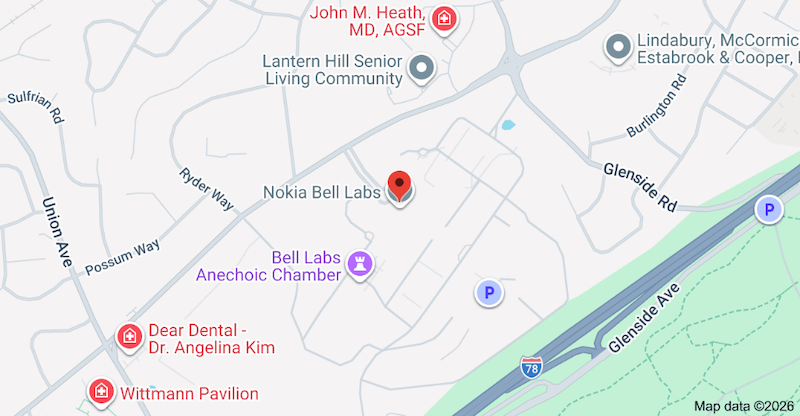
The decoded text reveals geographic coordinates: 40°41'02.3"N, 74°24'04.6"W.
These coordinates pinpoint a specific geographic location on Earth: Nokia Bell Labs in Murray Hill, New Jersey.
3. Uncovering the Easter Eggs
Both the decoded Base64 payload and the surrounding metadata header lines in signal_intercept.log are packed with computing history and tech lore:
1. Geographic Origin — Bell Labs (Murray Hill, NJ)
The Murray Hill campus is closely associated with UNIX and the C programming language. Bell Labs is also closely associated with Claude Shannon's foundational work on information theory.
2. Unix Epoch Reference
The header line # INBOUND SIGNAL DETECTED — 1970.01.01 00:00:01 UTC paired with # SYSTEM CLOCK: T+0000000001 marks 1 second after the Unix epoch (January 1, 1970 00:00:00 UTC), the reference point used by Unix time and many related systems.
3. PDP-11 & The 60Hz Line Clock
HARDWARE: PDP-11 and TIMER: 60Hz refer to the Digital Equipment Corporation (DEC) PDP-11 minicomputer family and its line-frequency clock hardware. UNIX began on a PDP-7 in 1969, its First Edition ran on a PDP-11/20 in 1971, and its kernel was rewritten in C for the PDP-11 in 1973. The timeline is documented in The Open Group's UNIX history and Dennis Ritchie's account of C's development.
4. Hitchhiker's Latency
LATENCY: 0.042ms is a nod to 42, Douglas Adams' famous answer in The Hitchhiker's Guide to the Galaxy.
Ready to investigate more? Start the first 3 puzzles free →
No credit card is required. You can also see what the complete ten-puzzle game includes →.